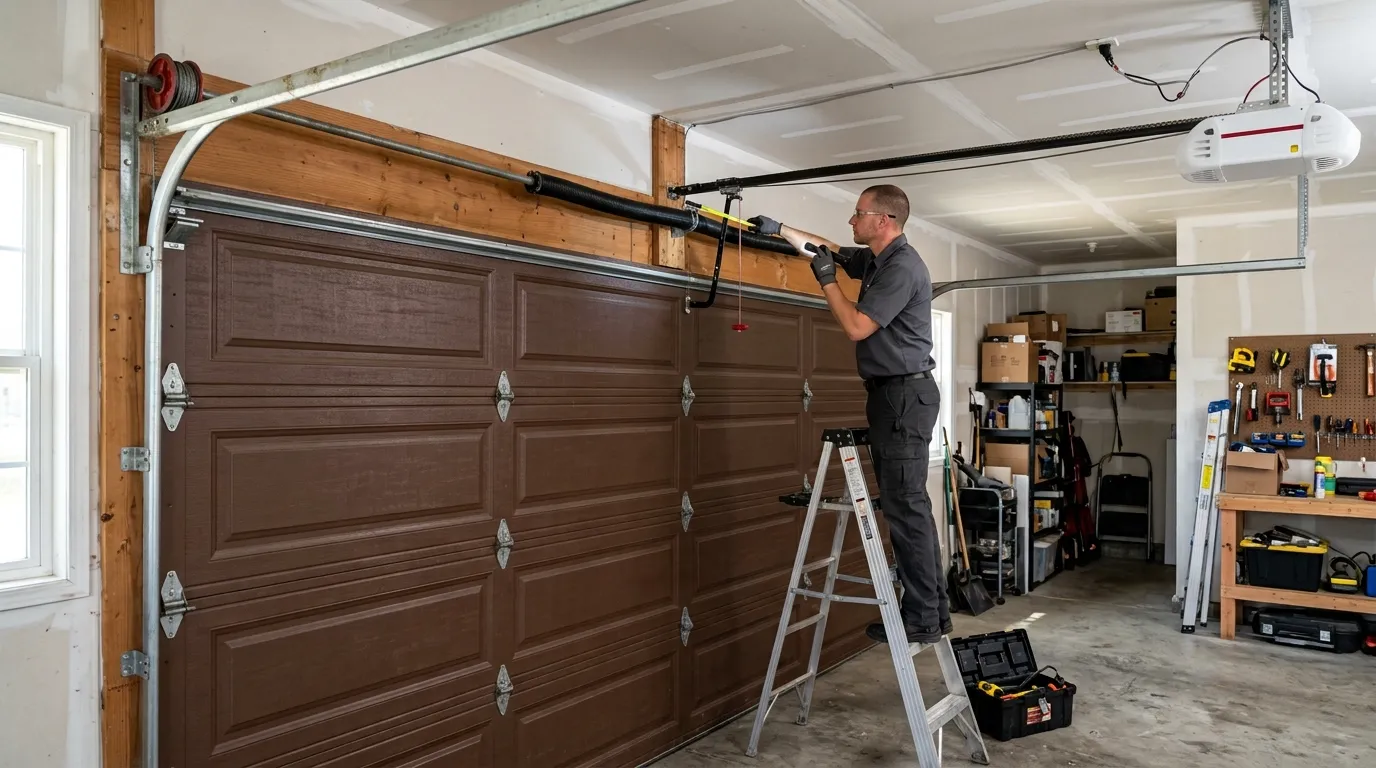
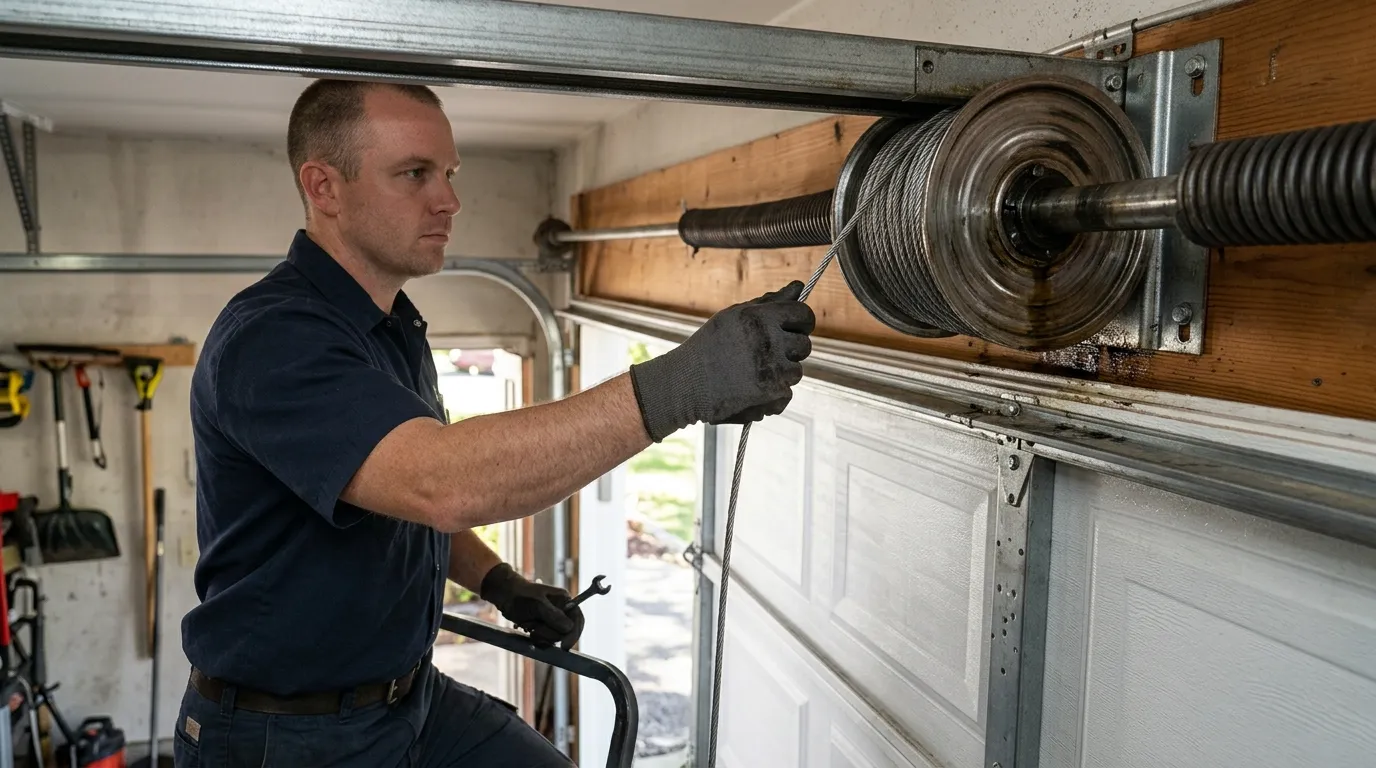
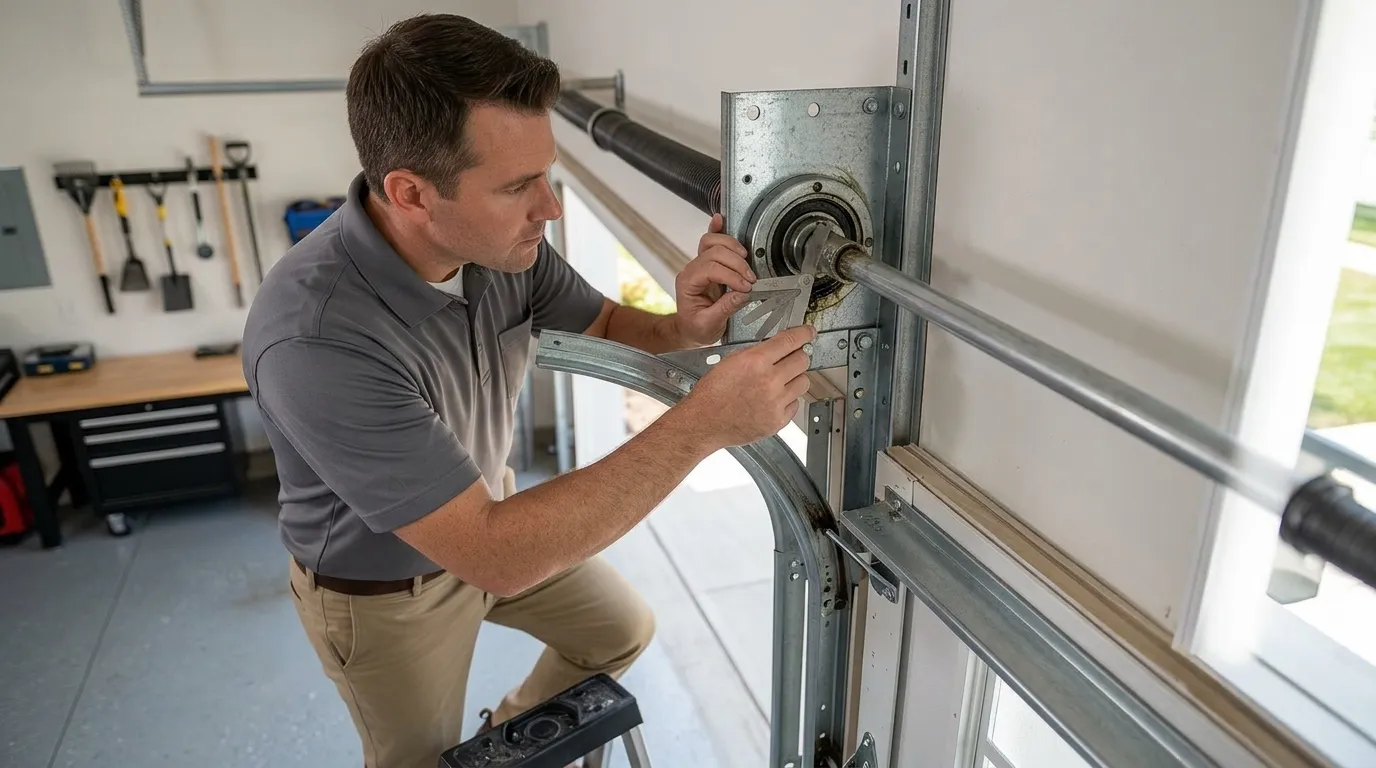
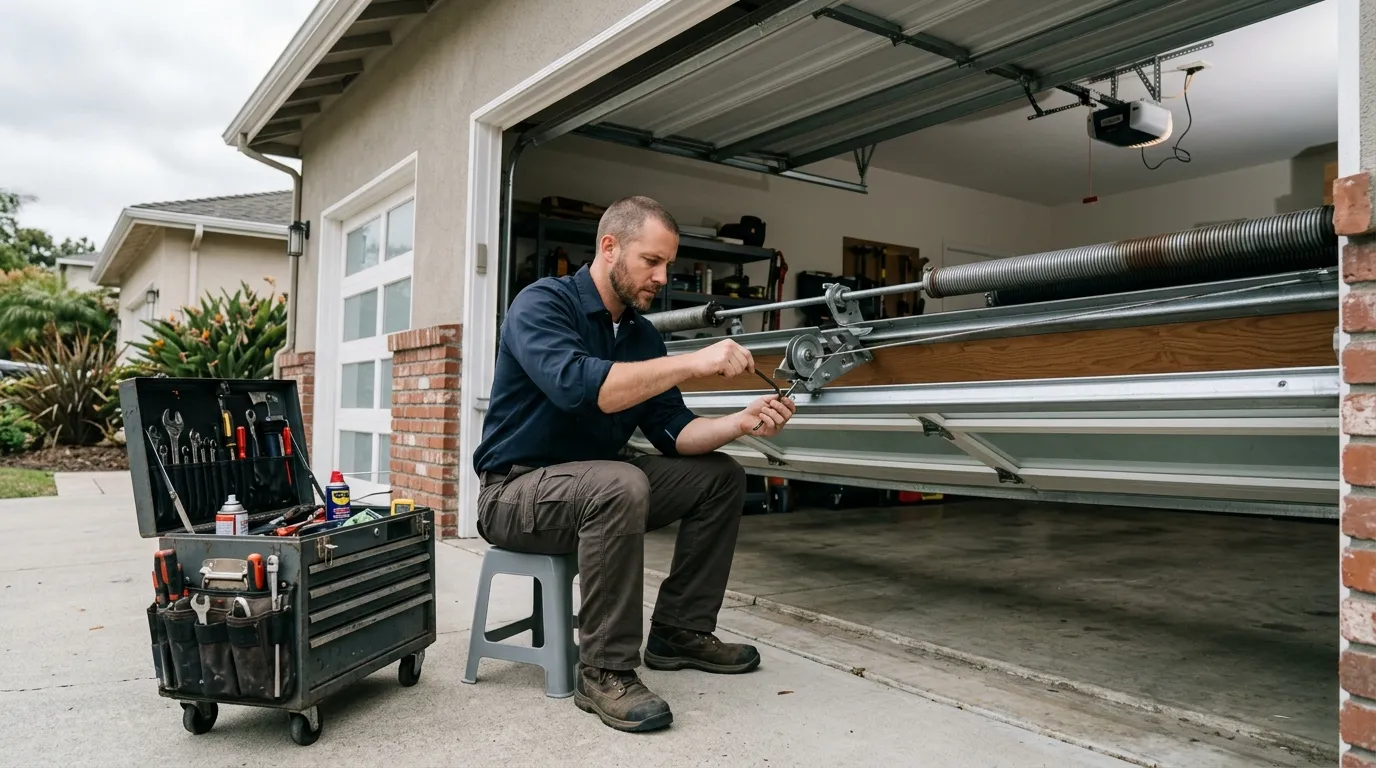
The region sits in a cold-moderate climate band, and that matters more for a decades-old door than a new one. Extension springs and steel cable from the late 1980s were built to spec for that era, not for another thirty-plus winters of contraction and expansion. Grease hardens, cable strands fray at the drum, and a spring that's cycled tens of thousands of times finally lets go - usually on the coldest morning of the stretch, when steel is least forgiving.
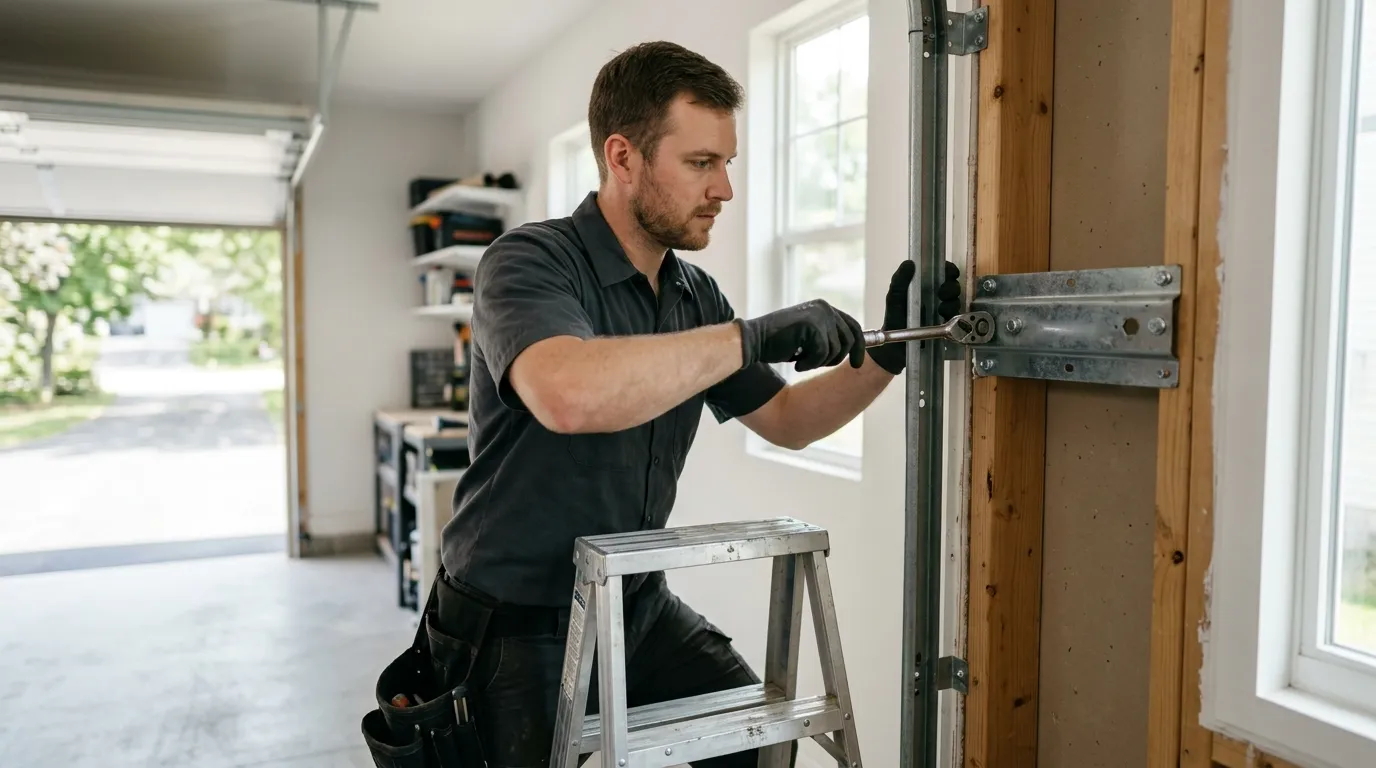
The other local factor is what's underneath the door, not just on it. Houses built to 1988 standards typically have a single torsion or extension setup sized for the original panel weight. If a homeowner has swapped in a heavier insulated door since then without upgrading the spring system to match, the opener works harder than it should and the springs wear faster than their rated cycle count would suggest.