
Era-narrow housing window
That size matters for the kind of work that comes up. Most houses here went up in the late 1980s, with a median build year of 1989, which lines up with the region's broader 1985-1991 housing wave.
Cornville, Sedona
Garage door repair and service for Cornville, AZ homes built mostly in 1989, served by truck from Sedona, 10 miles out. Spring, opener, and track work for late-1980s hardware.
Watch-outs
Cornville is a small piece of the service area we cover out of Sedona - around 1,457 households, not the thousands you'd find in a bigger town.
That size matters for the kind of work that comes up. Most houses here went up in the late 1980s, with a median build year of 1989, which lines up with the region's broader 1985-1991 housing wave.
That means original steel sectional doors, torsion or extension springs sized for lighter, thinner panels, and openers from an era before today's heavier insulated doors became standard. A small town with a narrow building window doesn't get a mix of eras like a city does.
It gets the same handful of failures showing up again and again: spring wear from age rather than variety of hardware, opener control boards from the same production run failing around the same mileage, and steel panels that were never built for the composite or heavier wood-look doors sold now. We don't have a yard or a branch in Cornville - every job here starts as a 10-mile drive from Sedona, and that's worth knowing before you call expecting a same-hour fix.
Warning signs
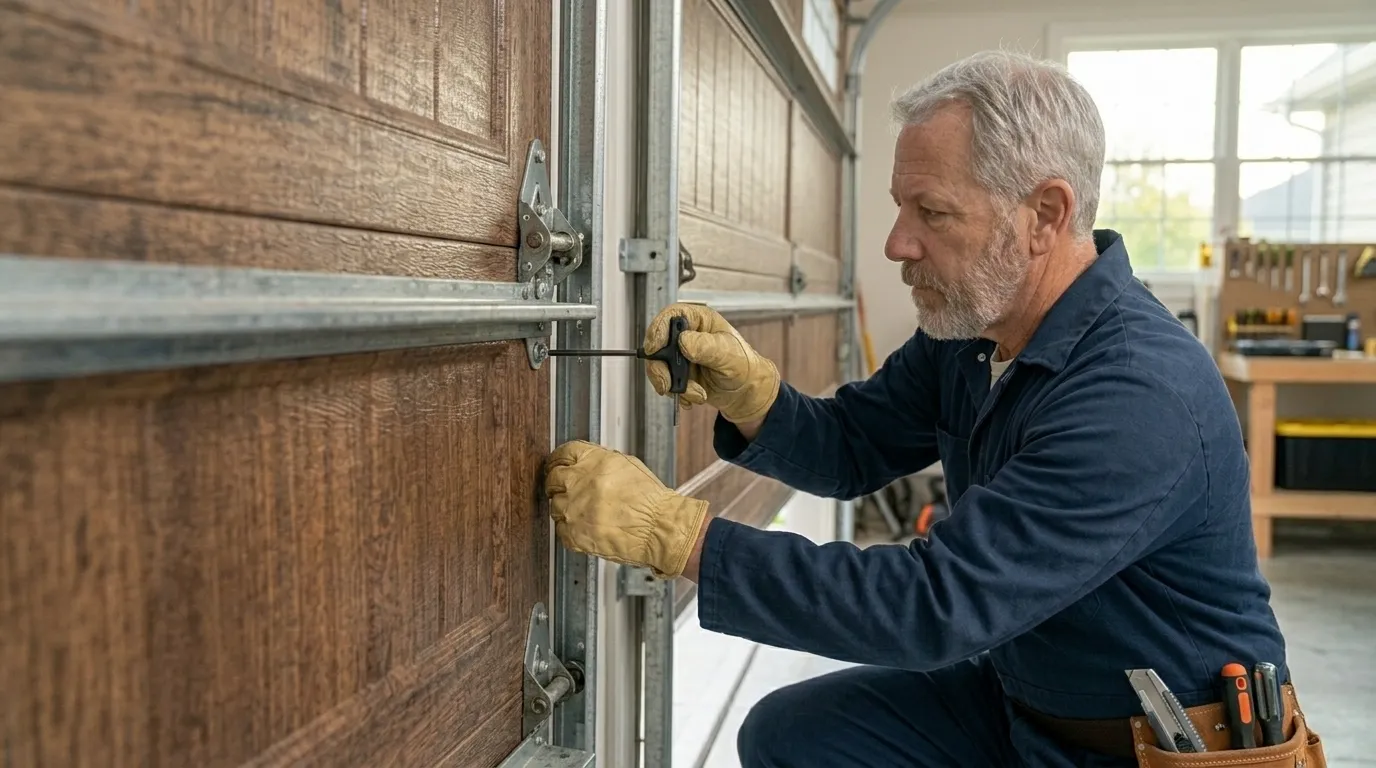
The climate band here is cold and moderate, not desert-hot, and that changes how hardware fails compared to lower-elevation stretches of the service area. Cold mornings stiffen the grease on torsion springs and rollers, so a door that's fine by afternoon can bind, groan, or hesitate at first light.
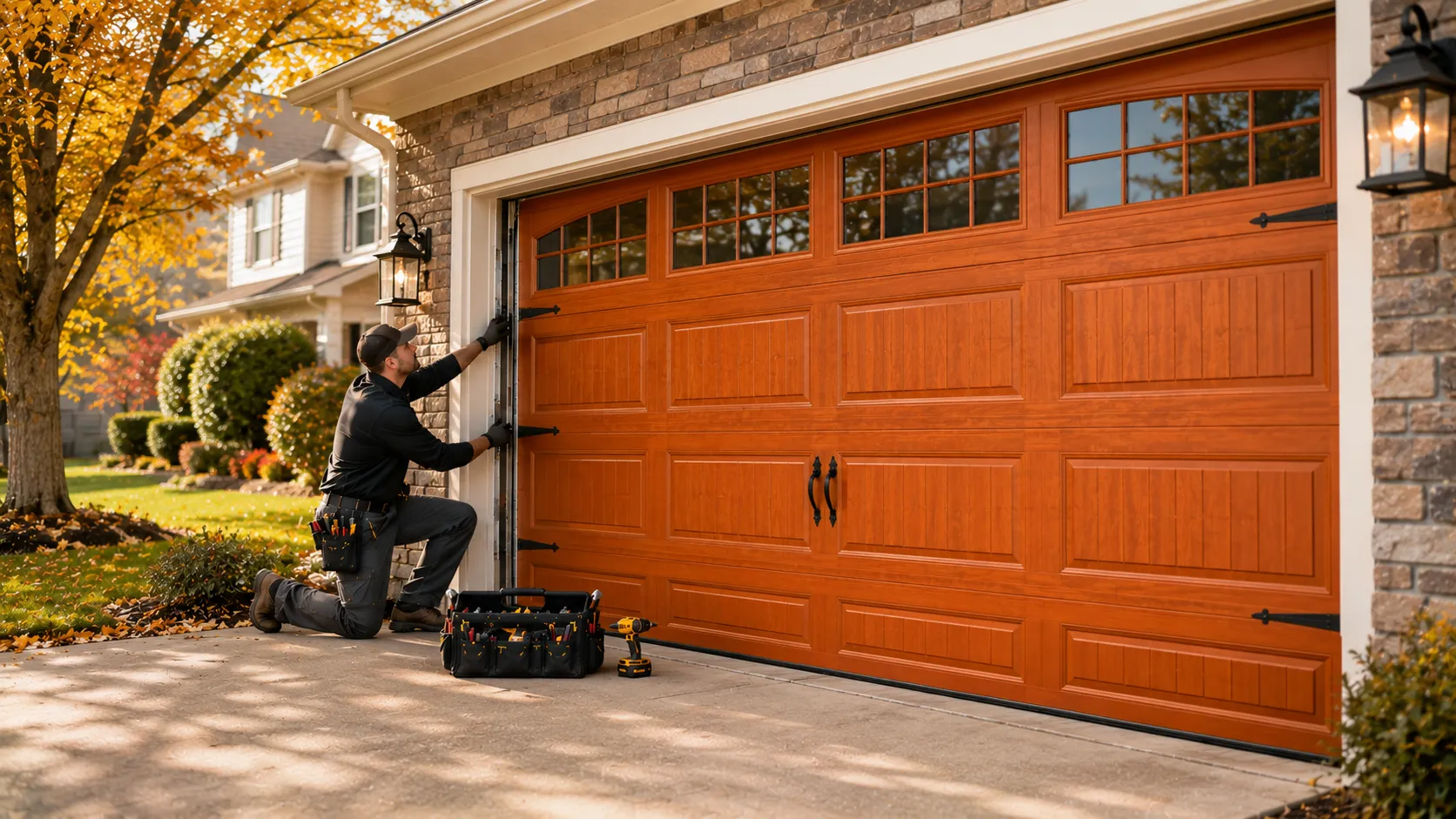
On a house built in 1989, that spring has had three decades of temperature cycling - expansion in the heat of the day, contraction overnight - and that's exactly the kind of fatigue that ends in a snapped coil rather than a slow leak of tension.
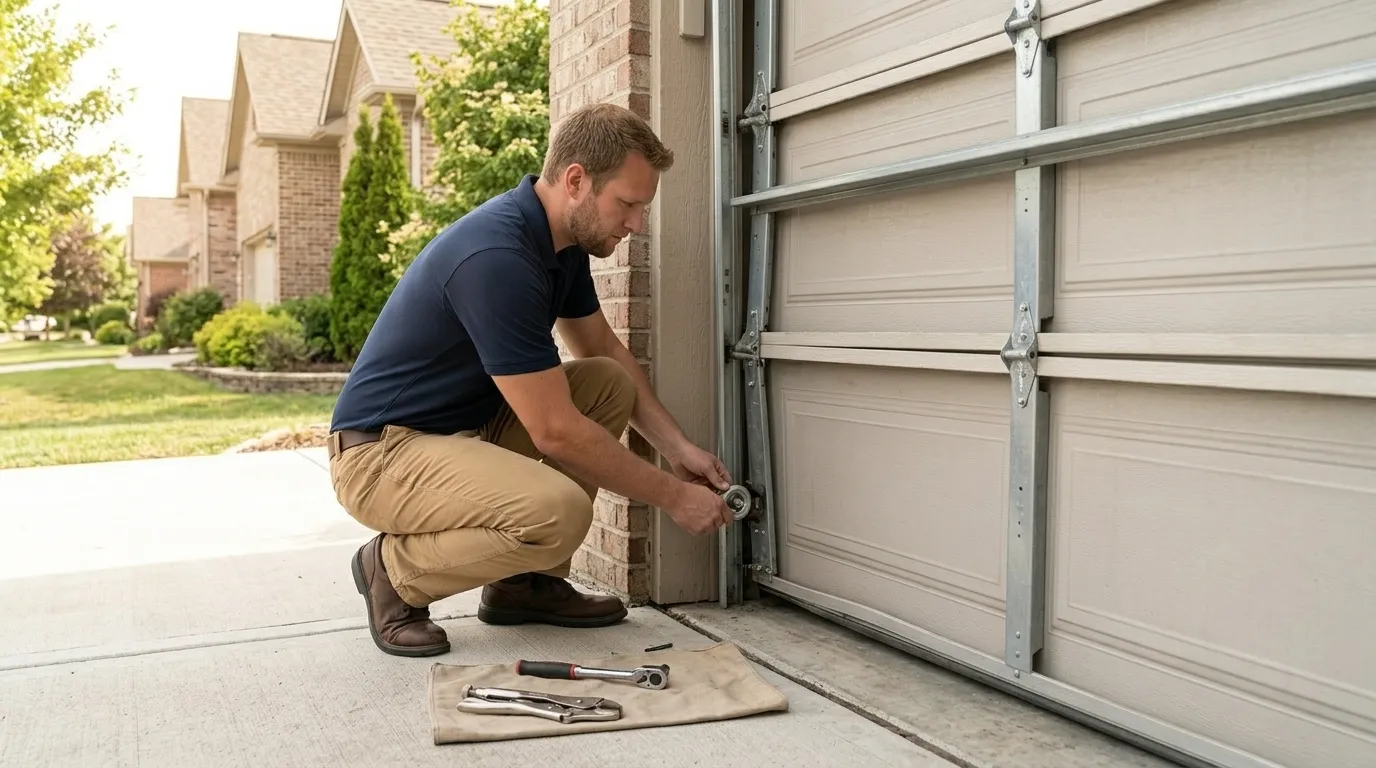
Weatherstripping and seals on doors this age are usually brittle by now, which shows up as daylight at the bottom corners or a draft that wasn't there when the house was new.
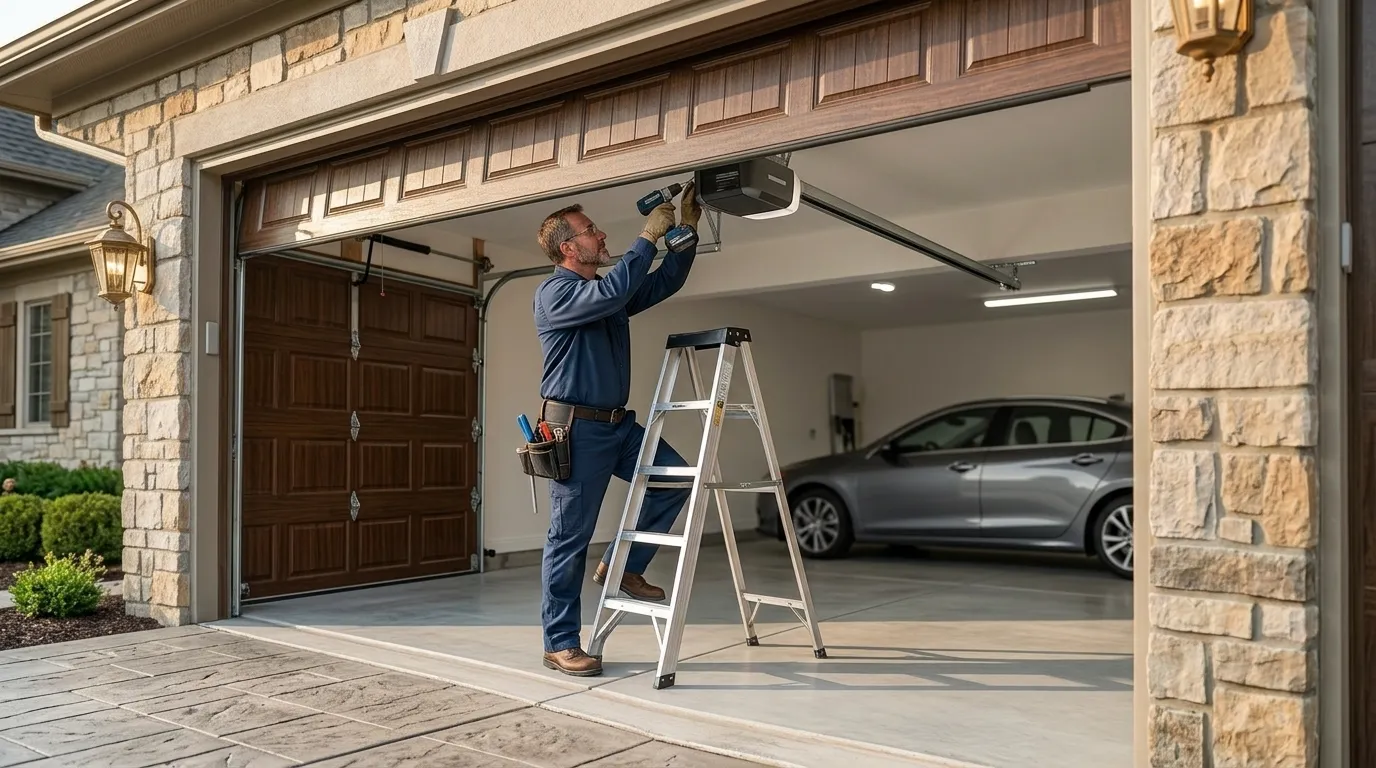
Opener boards from that build era also tend to go out with a whimper rather than a bang: intermittent response, a remote that works from the driveway but not the street, a wall button that needs three presses. None of that is dramatic until the day the door won't open at all.
Pricing
We don't post a flat number for Cornville because the drive, the door, and the fix all move the total - a spring swap on a 1989 steel door is not the same job as an opener board replacement or a full torsion conversion.
What we can say is that Cornville households have a median income of roughly $70,925, and most of the calls we get here are repair calls, not full replacements. That tracks with houses this age: the door itself is usually sound, and it's the moving parts - springs, cables, rollers, the opener - that wear out first.
One honest limitation: if a part specific to a 1980s door has gone out of production, we may need to order it, and that adds days, not hours, to the job.
We'll tell you that up front rather than promise a fix we can't deliver same-day. Full replacement makes more sense than repair once you're chasing the third or fourth failure on the same original door.
Local causes
A generic garage door page could say all of the above about any town in the Southwest, and that's the problem - it wouldn't actually be true of Cornville. The fault pattern here is tied to the fact that most of this town's houses were built within a few years of 1989, which means the hardware failing right now is hardware from a specific, narrow window, not a spread of eras. Swap in a town where the housing stock runs from the 1960s through the 2000s and the whole diagnosis changes - different spring types, different panel materials, different opener generations.
The distance matters too. Cornville sits about 10 miles from Sedona, and we don't keep a branch or a stocked truck sitting in town waiting for calls. Every job is a drive first. A page that implies a local depot or a same-hour guarantee here would be describing a company that doesn't exist. What does exist is a service area with a known housing age and a known climate band, and a fix that starts from those two facts, not from a generic checklist.
Questions
No. We work out of Sedona and drive to Cornville for every job - it's about 10 miles. There's no local branch, so scheduling depends on truck routing that day rather than someone already being nearby.
Cornville sits in a cold, moderate climate band, and low overnight temperatures stiffen the grease on torsion springs and rollers. A door that's fine by mid-afternoon can bind or groan at first light. It's a common complaint on older springs, not a sign the door is failing outright - though it can speed up wear.
Plenty of them still are, but springs, cables, rollers, and opener boards from that era are past their expected working life. If you're on the second or third repair call for the same door, replacement usually costs less over time than another patch.
Sometimes. If the specific hardware is out of production, we may need to source a compatible part, which adds days rather than hours. We'll tell you before starting the job if that's the case rather than promise a same-day fix we can't back up.
Explore more
Ready when you are
Sedona Garage Door Pros repairs and installs garage doors, springs and openers in Sedona, AZ and the surrounding area.