
Earlier neighborhood build year
What does shift here is what usually needs doing. Kachina Village's housing stock runs a median build year of 1985, a couple years ahead of the 1987 median for the wider service area covered from Sedona.
Kachina Village, Sedona
Kachina Village homes median from 1985, a touch older than the service area's 1987 median. That gap changes which springs and rollers are due for a look.
Pricing
There's no separate price list for Kachina Village versus the rest of the Sedona service area - a maintenance visit costs what it costs based on what's on the door, not the zip code.
What does shift here is what usually needs doing. Kachina Village's housing stock runs a median build year of 1985, a couple years ahead of the 1987 median for the wider service area covered from Sedona.
Two or three years doesn't sound like much until you're talking about torsion springs and galvanized rollers that were only ever rated for 10,000 to 15,000 cycles. On a door opened twice a day, that clock runs out in the mid-2010s regardless of the town it's in - but Kachina Village hit that mark slightly sooner as a neighborhood.
The visit itself covers spring tension check, track alignment, roller and hinge inspection, and opener force settings. We don't pad the invoice with a full parts replacement if the door doesn't need one; if it does, that's a separate conversation, not folded into a maintenance charge.
Warning signs
A door that's overdue for maintenance in this pocket of the service area usually announces itself the same three ways. First, a grinding or popping sound on the way up - that's a roller riding a track edge it should be centered on, common once the original rollers from an 80s build start to flatten.
Second, a door that reverses on its own a few inches off the floor, which on a mid-80s opener usually means the down-force is set wrong for a spring that's lost tension, not a bad sensor.
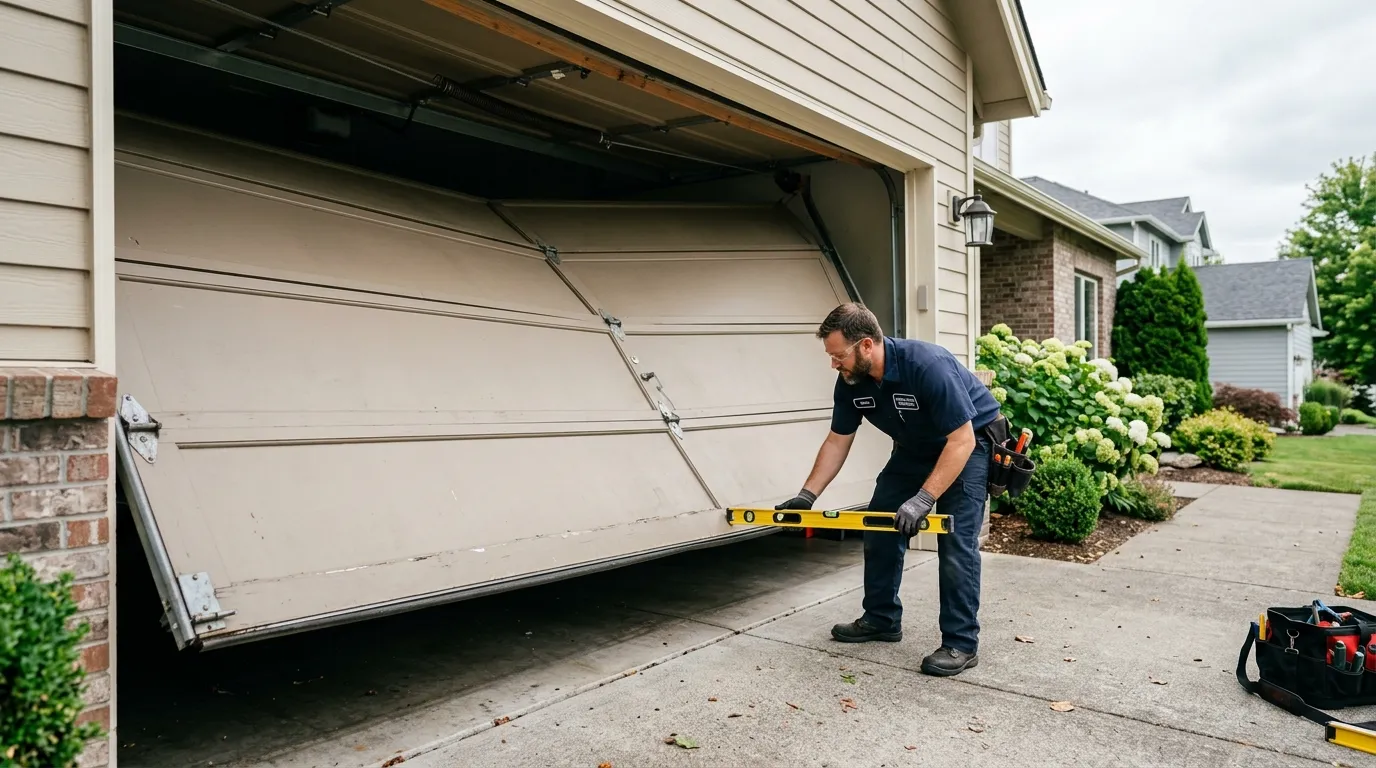
Third - and this one's specific to houses in this build era across the service area - a door that feels heavier at the bottom of its travel than the top, which points to spring wind loss rather than a track problem.
None of these are emergencies on day one. They're all signs that the maintenance window closed a while back and something's about to fail on its own schedule instead of yours.
The repair
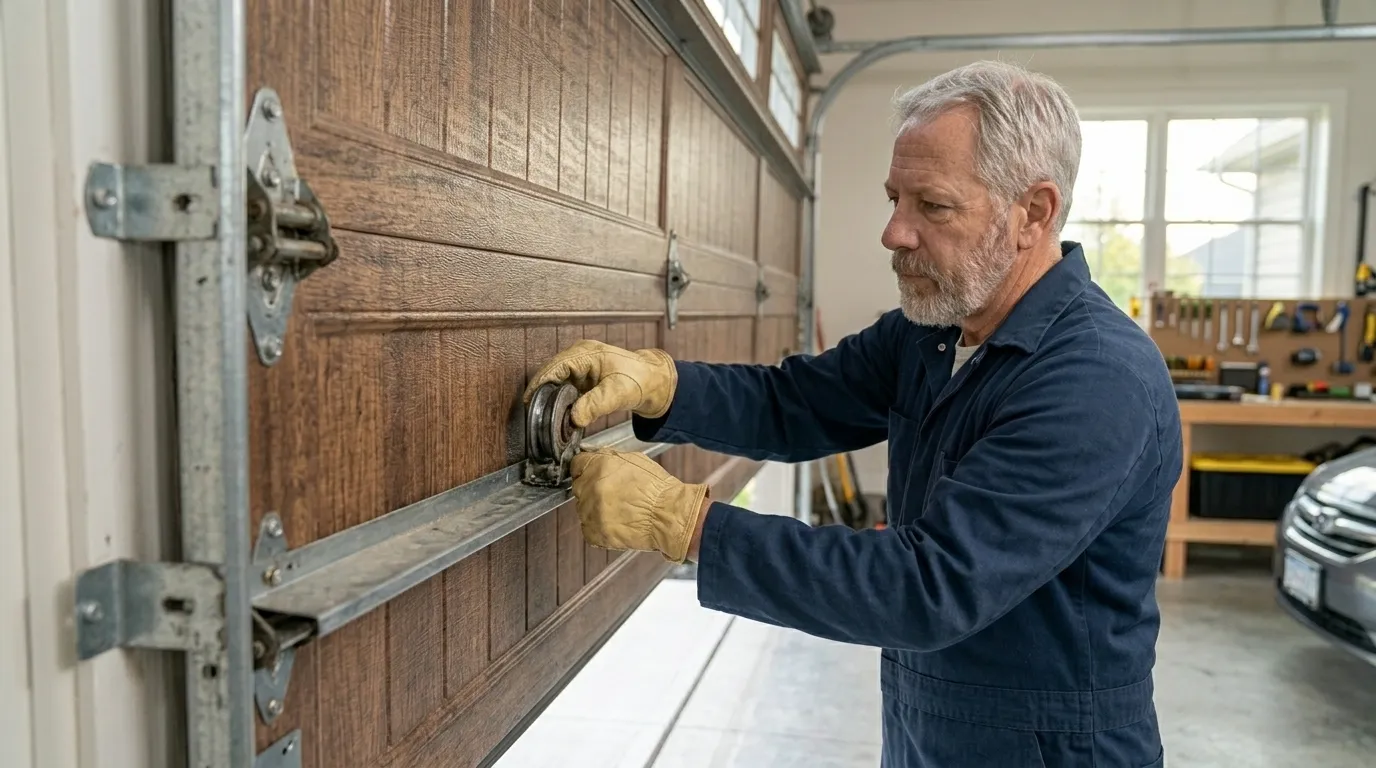
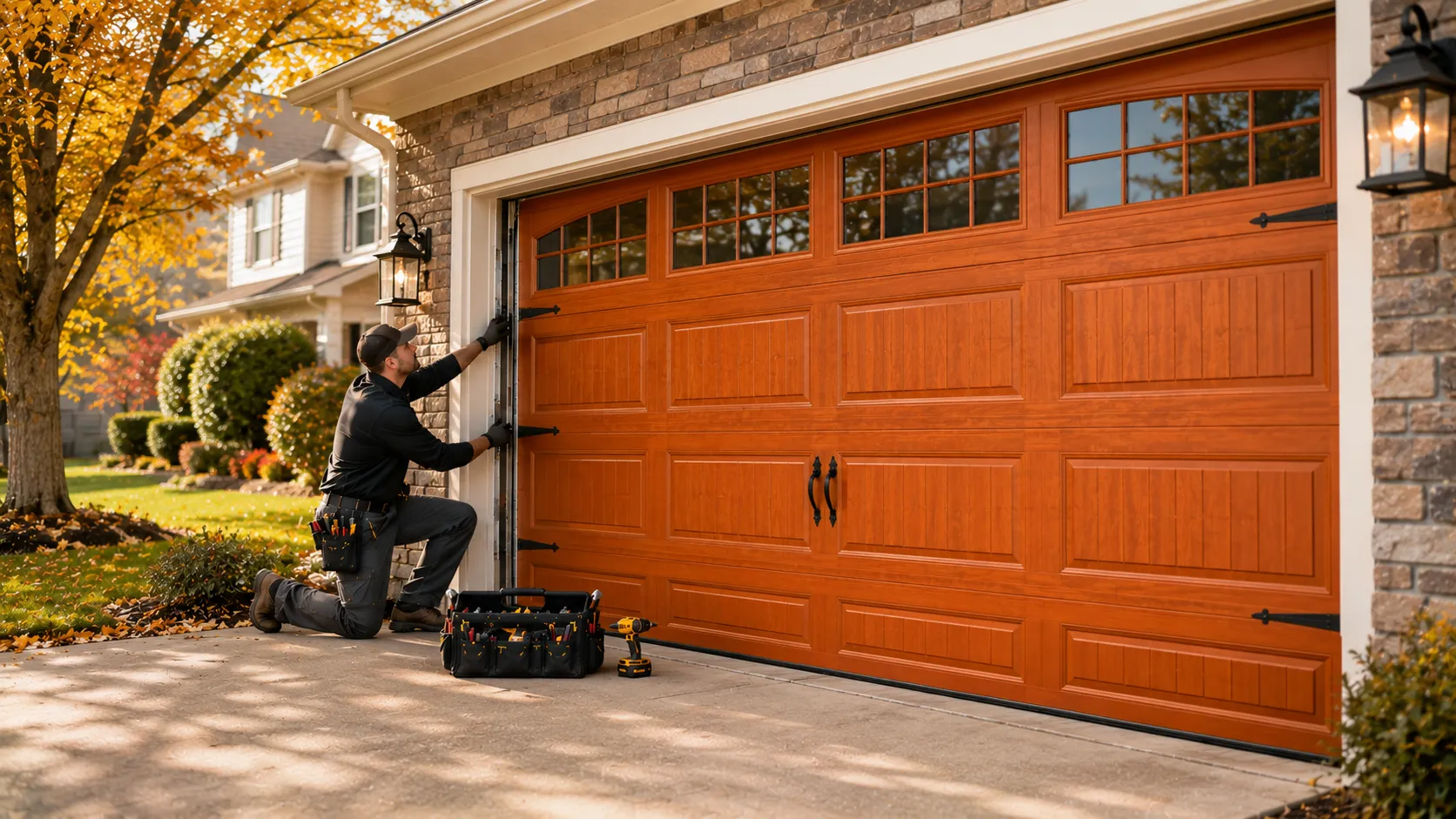
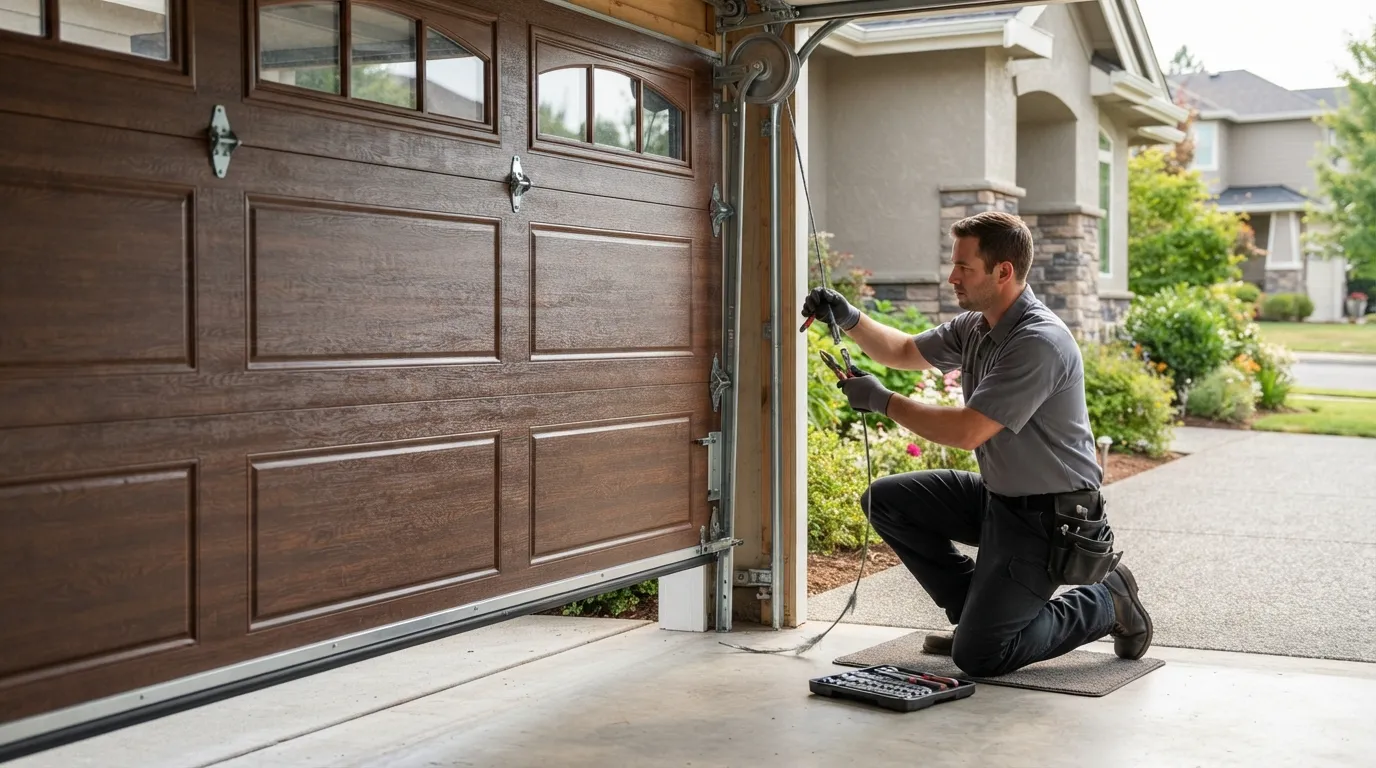
For a standard maintenance visit on a door in this age bracket, we're checking spring balance by hand, not by guesswork - lift the door halfway and see if it holds. If it drifts down, the spring's under-tensioned; if it shoots up, it's over. We re-lubricate hinges and rollers, check the cable drums for fraying, and confirm the opener's travel limits haven't drifted, which happens on its own over years of thermal cycling even without anyone touching the settings. On a door that's original to a 1985 build, we're also looking at whether the track gauge and drum size match current stock, because some of that older hardware isn't a straight swap if a part does fail later. That's not a maintenance-day fix - it's a heads-up for planning, not a surprise bill.
Watch-outs
The complication specific to this stretch of the service area is parts availability on original hardware. A door built in 1985 may have springs wound to a size that isn't a common stock item anymore, and a strict maintenance visit isn't the place to source a replacement - we can tell you it's close to end of life, but ordering the exact match sometimes takes more than a same-day trip. We also don't do maintenance on doors with visibly cracked panels or bent track; at that point you're past tune-up territory and into repair or replacement, and we'll say so rather than charge for a service visit that won't hold.
Local causes
Kachina Village sits about 17 miles from Sedona, in a climate band the region shares - cold enough in winter that steel contracts and hardware tolerances tighten, then swings back with the heat.
That cycle is harder on original 1980s-era springs and fasteners than on newer galvanized parts rated for it. Combined with a median build year of 1985 - slightly ahead of the 1987 median for the broader area - a meaningful share of doors here are running on hardware that's already past the point where annual maintenance catches problems early rather than late.
It's not that the town is unlucky; it's that the housing got built in a tighter window than some of the surrounding areas, so more doors are hitting end-of-life hardware at roughly the same time.
DIY or pro
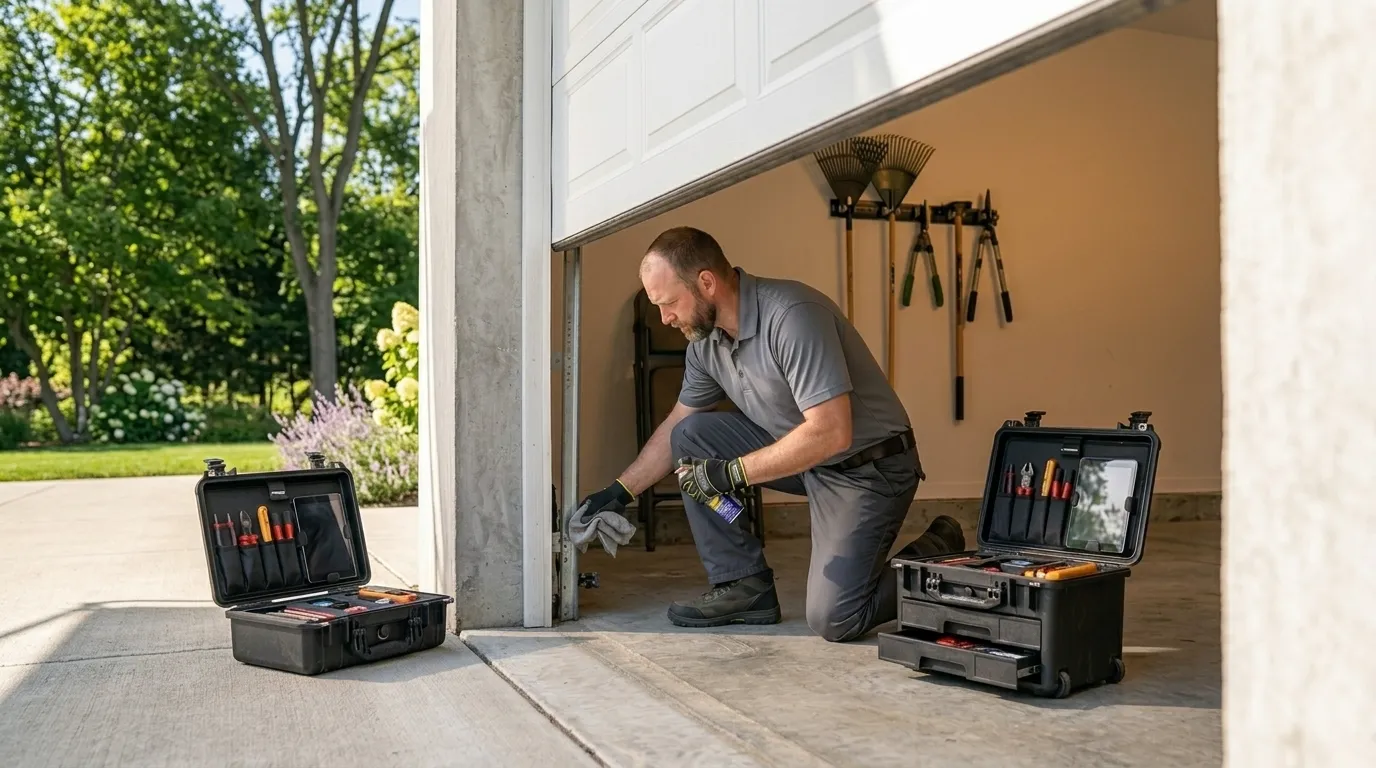
Lubricating hinges and rollers with a garage-door-specific lubricant, and visually checking cables for fraying, is reasonable DIY work and worth doing between visits. What isn't: touching the torsion spring itself. It's wound under enough tension to cause a serious injury if it lets go while you're adjusting it, and that's true on any door, any town, any year. If your door is drifting down when lifted halfway by hand, that's a spring balance issue - note it, don't fix it yourself, and get it looked at before it becomes a full failure instead of a scheduled repair.
Questions
Once a year is standard for most doors, but if yours is original to a mid-1980s build, twice a year is worth considering - the hardware from that era is closer to end of cycle life, and catching a failing spring or roller early is cheaper than an emergency call.
No - we run out of Sedona and cover Kachina Village and the surrounding service area from there, about 17 miles out. There's no separate local depot, and we don't advertise a response time specific to this town.
Springs and rollers are rated in cycles, not years, but cycles track roughly with age. Kachina Village's median build year of 1985 puts a good share of doors right at or past the point where original hardware is due for replacement, which changes what a maintenance visit is likely to find.
Explore more
Ready when you are
Sedona Garage Door Pros repairs and installs garage doors, springs and openers in Sedona, AZ and the surrounding area.