Kachina Village, Sedona

Garage Door Opener Installation, Kachina Village AZ

Kachina Village houses date to about 1985, mostly before the 1993 photoelectric-sensor rule. See what that means for opener installation and cost here.

Garage Door Opener Installation, Kachina Village AZ in Sedona
Serving Sedona, AZBackground-checked techsHonest, upfront pricingFast local response

Pricing

What You Pay

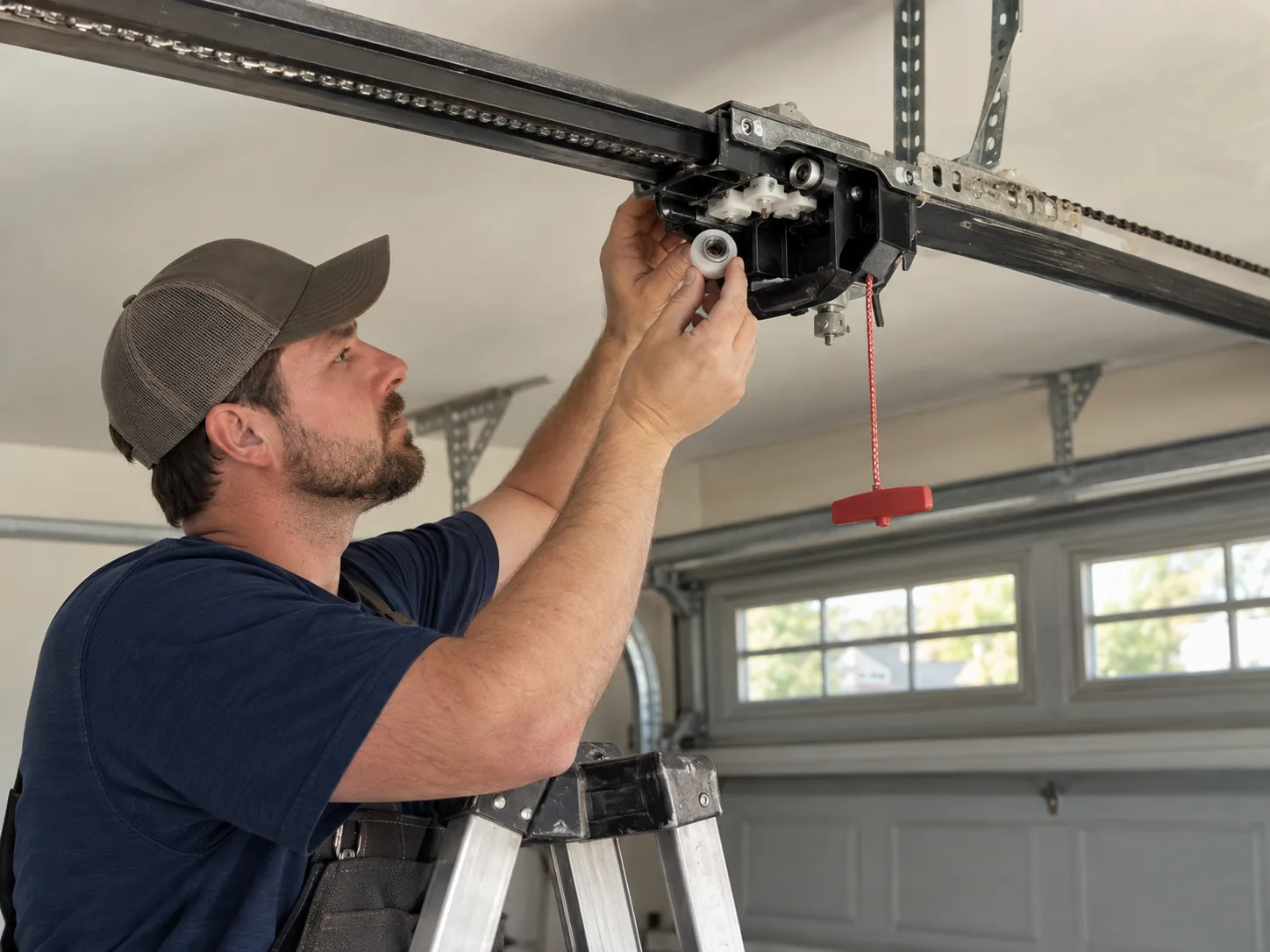
We can't quote a number without seeing the door, but a few things move the price up or down here specifically. Most houses in Kachina Village went up around 1985, and a lot of them still have the opener that came with the house - a chain-drive, half-horsepower unit with none of the safety hardware that became mandatory in 1993. Replacing one of those isn't a straight swap. You're not just bolting on a new head unit; you're adding the photoelectric sensor pair, often running new low-voltage wire along the track, and sometimes reinforcing the header bracket because the original wood backing was sized for a lighter unit. Belt-drive kits cost more up front than chain-drive but run quieter, and we're seeing more owners here ask for them - median household income in Kachina Village runs $79,085, above the $70,925 median across our wider service area, and that shows up in which drive type people choose. We don't publish a flat number because the sensor retrofit work varies house to house.

What You Pay

Warning signs

How It Shows Up

The opener doesn't die all at once. On original 1985-era hardware, the first sign is usually the door reversing at random - no obstruction, no reason, it just doesn't finish closing.

Pre-sensor mechanical design

That's the logic board or the drive gear failing, not the sensors, because a lot of these units predate sensors entirely. Some owners have already had a mismatched aftermarket sensor pair bolted on at some point over the last three-plus decades, wired into a control board never built for them.

Grease varnish hardening

You'll also hear it before you see it: a chain-drive unit that's run since the mid-80s grinds instead of hums, and the grease inside has usually dried out to something closer to varnish.

Cold release delay

In the cold moderate winters we get here, that dried grease makes the whole assembly slower to release in the morning, which owners often mistake for a spring problem when it's really the opener dragging.

What the Repair Takes

The repair

What the Repair Takes

A straight opener swap on a door that's already in good shape is a half-day job: pull the old head unit and rail, mount the new one, run power, pair the sensors, set the travel limits, and test the auto-reverse with a piece of scrap wood on the floor. Where it takes longer is the header. On 1985-vintage construction we often find the original wood backing sized for the lighter old unit, so we add blocking before mounting anything heavier. If the door has never had photoelectric sensors, that's new wire run along both tracks and a beam alignment check, not just a five-minute clip-on. We also test the wall control and any remote in the house, since a lot of these houses have had two or three openers over the decades with mismatched remotes still floating around.

Watch-outs

The Complications

We're coming from Sedona, 17 miles out, so an opener install here gets scheduled as a full visit rather than fit in between closer jobs.

Wiring infrastructure gaps

That's not a complaint, just how we plan the day - bring the right unit the first time, because a second trip for a part we didn't carry costs both of us time. The other complication is what's behind the drywall.

Track binding prevention

On houses from the 1985-1991 build years common in this area, we sometimes find the garage wiring wasn't set up with a dedicated outlet near the header, which means an electrician's involved before we can finish, not us.

Opener and door pairing

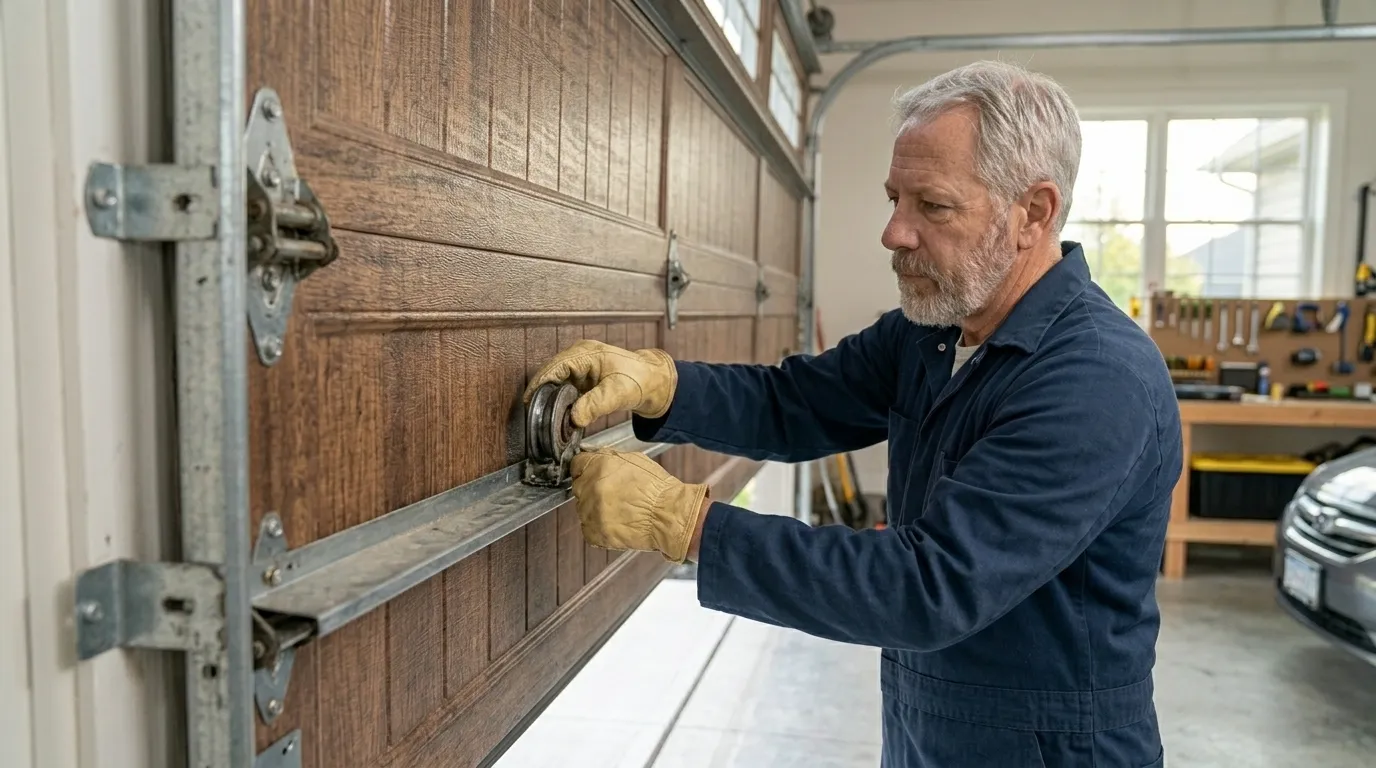
And if the original track is bent or the rollers are shot, putting a new opener on old track just moves the failure point - we won't install a good opener on a track that's going to keep binding it.

Why This Fails Locally

Local causes

Why This Fails Locally

Kachina Village sits mostly on 1985-vintage housing stock, and that one detail explains most of what we find on service calls: hardware original to the build, before the federal photoelectric-sensor mandate, running on gearing and grease that's outlived its design life by decades. Across the roughly 1,328 households here, that's not a rare exception, it's the norm - original opener, original track, maybe one strap-on sensor kit added at some point. The cold moderate winters make the failure show up faster than it might elsewhere, because dried-out lubricant in a 35-year-old gear case doesn't move well below freezing. None of that is unique to any one house on the block; it's the age of the neighborhood itself doing the damage.

DIY or pro

Can You Do This Yourself

Swapping a wall control or a remote is fine to do yourself - no code issue, no safety system involved. Installing the opener head unit itself is a different job. Auto-reverse and photoelectric sensor alignment are safety systems, not conveniences, and a misaligned sensor pair can let a door close on something it should stop for. If your house still has the 1985-original opener with no sensors at all, that's not a DIY upgrade, it's a code-relevant retrofit. We'll say plainly: if your track and rollers are already worn, replacing just the opener head is a half-fix, and we'd rather tell you that up front than sell you a new motor on top of bad track.

Can You Do This Yourself

Questions

Common questions

Does my opener need photoelectric sensors if the house never had them?

If the opener has never had them, it predates the 1993 federal rule requiring them on new installs. We don't retrofit sensors as an optional add-on - any opener we install gets the sensor pair wired and aligned, since that's the auto-reverse safety check that stops the door on an obstruction.

Why does the opener grind more in winter here?

Kachina Village sits in a cold moderate climate band, and grease inside an older gear case, especially one that's original to a house built around 1985, thickens in low temperatures. That drag reads as a struggling motor even when the real issue is decades-old lubricant.

Will you come out just to swap a remote?

We travel from Sedona, about 17 miles out, so we schedule opener work as a full visit rather than a quick stop. A remote swap alone usually isn't worth the trip on its own - it's often bundled with other opener or door work when we're already on site.

Is a belt-drive opener worth it over chain-drive here?

Plenty of owners in Kachina Village choose belt-drive now, partly because it's quieter than the chain-drive units common in 1980s installs, and partly because household income here runs above the wider service area median, which changes what people are willing to spend on the quieter option.

Ready when you are

Need a garage door sorted in Sedona?

Sedona Garage Door Pros repairs and installs garage doors, springs and openers in Sedona, AZ and the surrounding area.

CallGet a quote