Gear kit installation compatibility
Those go on the truck and get installed the same visit. What we don't keep on hand is a full shelf of legacy boards and gear kits for every opener model that shipped in the 1980s.
Munds Park, Sedona
Openers in Munds Park's mid-1980s homes are aging out together. We drive the 11 miles from Sedona to fix gear-drive units, worn sensors, and cold-strained motors.
Local causes
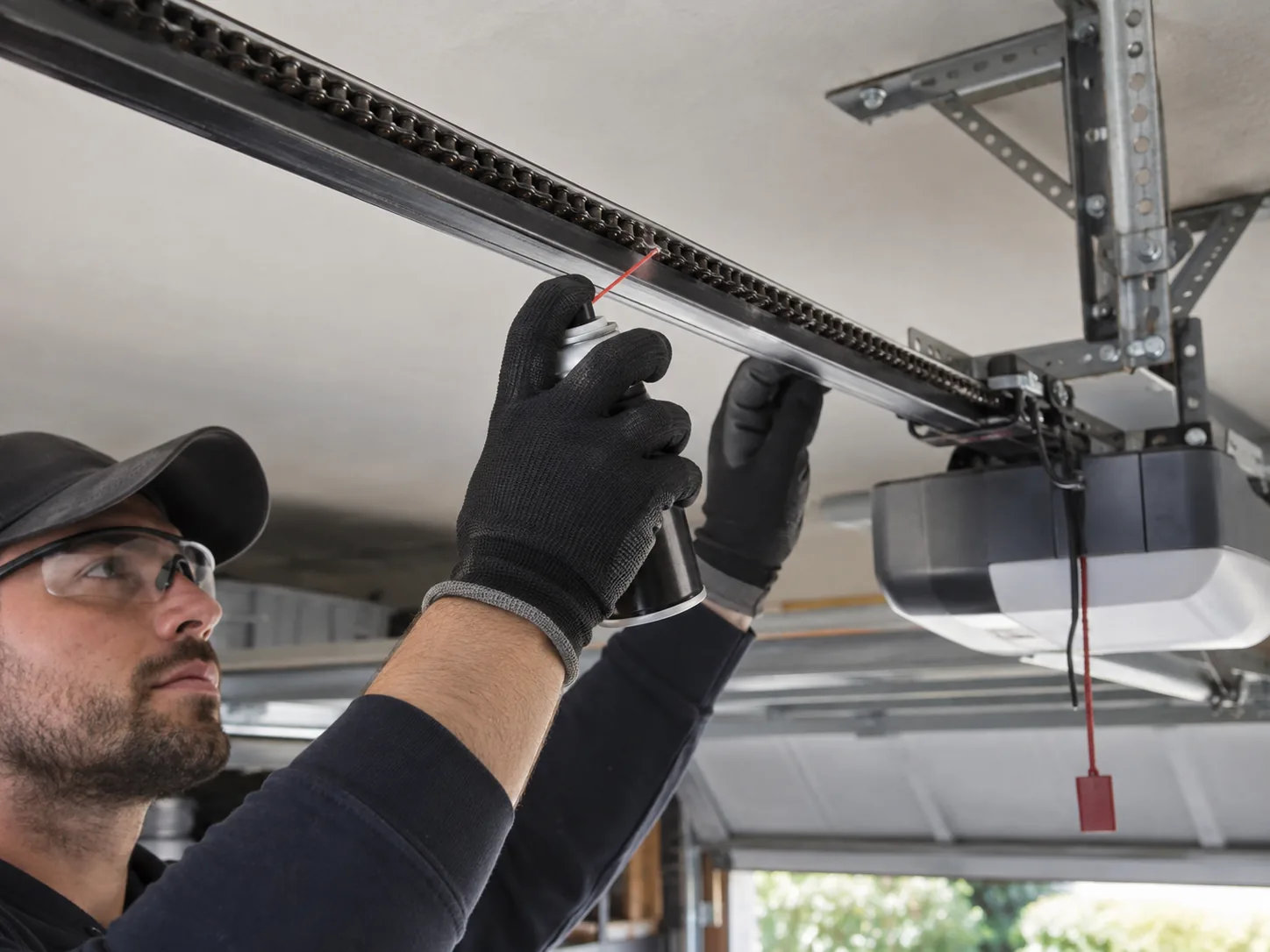
The failure we see most in Munds Park isn't a dead remote or a door that won't budge - it's a gear-drive opener grinding through its last few months on plastic sprockets that were never meant to run this long. The motor still spins. The chain or belt still pulls. But the drive gear inside the housing has worn down to a nub, so the door creeps up in fits instead of one smooth pull, or stalls a few inches off the floor.
That pattern lines up with the neighborhood's age. Munds Park's houses cluster tightly around 1985, which means most of the openers hanging over these garage floors are original units or their first replacement, both now well past the point where parts run reliable. A unit installed alongside a house built in 1985 is closing in on forty years of duty cycles, and gear-drive openers from that era weren't built with the safety reversal sensors or rolling-code security that later models carry standard. When one of these finally quits, it's rarely a single part - it's the whole assembly reaching its age at once.
The repair
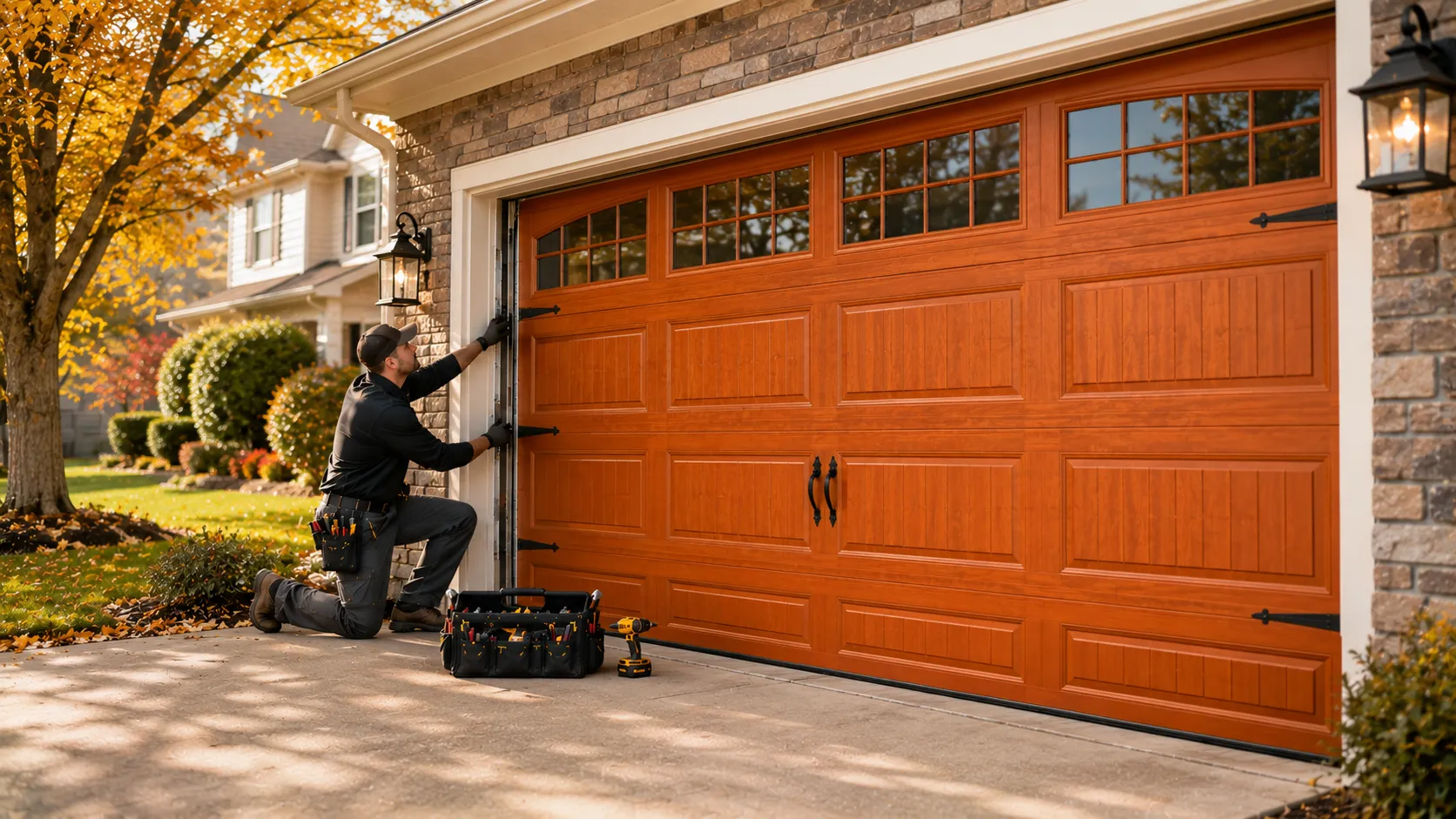
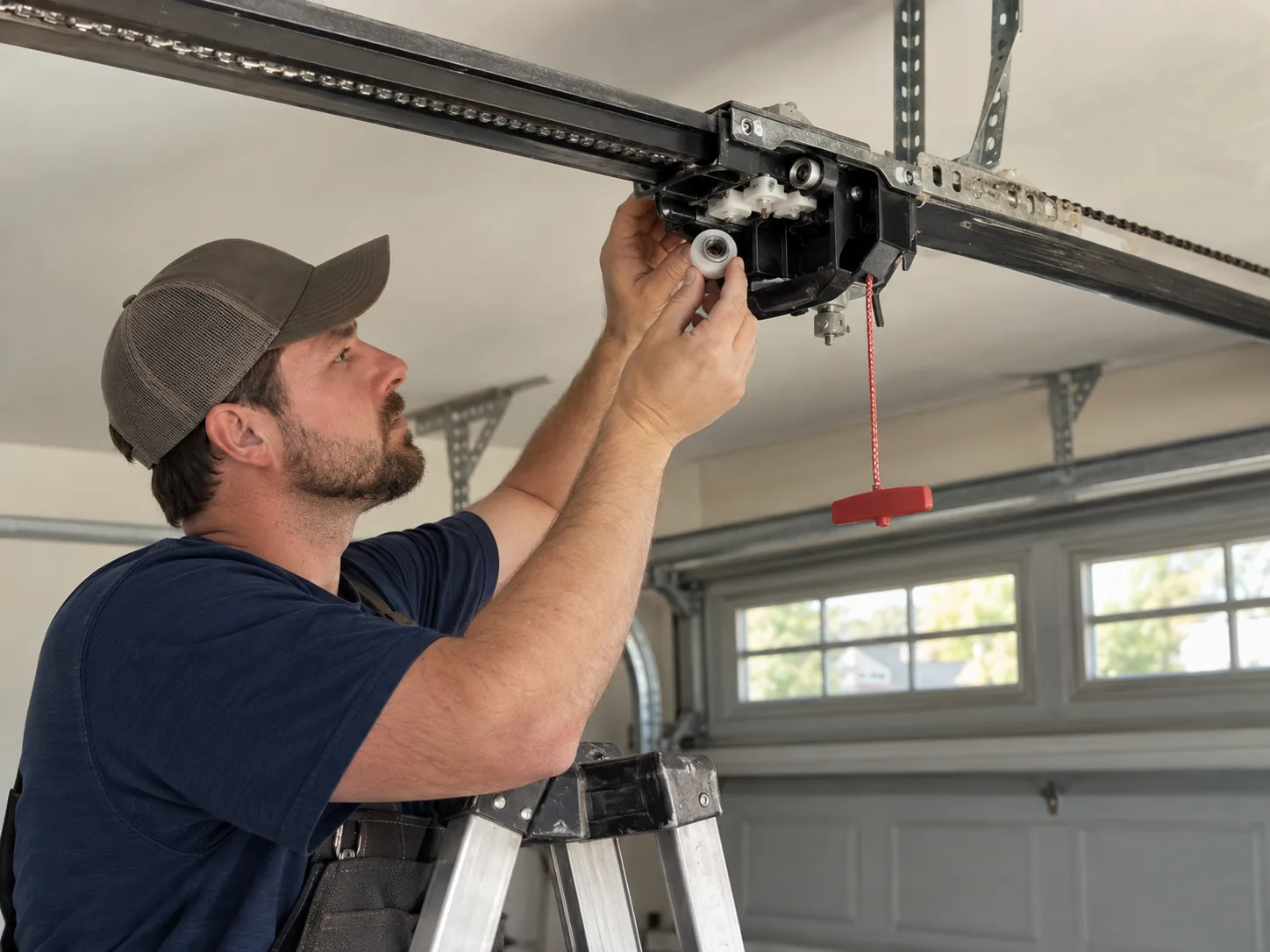
Most calls start the same way: pull the housing cover, check the gear and sprocket wear, test the capacitor, and look at the logic board for the telltale brown scorch marks that come from years of power surges up here.
If the gear's stripped, that's a straightforward swap - assuming the part is still made for that model, which isn't guaranteed on a unit this old. If the board's gone, that's a different conversation.
Some boards from the mid-80s to early-90s era aren't in production anymore, and rather than chase a discontinued part, we'll often recommend replacing the opener head outright rather than nursing a board that's going to fail again in a year.
That's not us upselling - it's just the honest math on a unit this age. We'll tell you straight which side of that line your opener is on before any work starts.
On the truck
We carry the parts that fail most often across the service area - capacitors, drive gears, sensor eyes, standard logic boards for the openers still in production.
Those go on the truck and get installed the same visit. What we don't keep on hand is a full shelf of legacy boards and gear kits for every opener model that shipped in the 1980s.
With just 455 households in Munds Park, there's no way to justify warehousing parts for units that stopped being made decades ago on the chance one fails this month.
If your opener needs one of those, we'll confirm the part, order it, and come back once it's in - we won't pretend to have it on the truck when we don't. That's the one honest limitation worth saying up front: cold-drive-home repairs happen fast, obsolete-part repairs don't.
Warning signs
In Munds Park's winters, cold thickens the grease packed into a gear-drive opener's housing until the motor has to strain just to get the door moving.
You'll hear it before you see it - a louder hum on startup, a hesitation before the door catches, sometimes a light knock as the gear catches unevenly on old teeth.
Other times it's quieter: the remote works from the driveway but not from inside the car, which usually means the antenna wire inside the housing has corroded or a sensor's drifted out of alignment after years of vibration.
Or the door reverses partway up for no clear reason, which on an opener this age often traces back to a worn limit switch rather than anything wrong with the door itself. None of these mean the door is broken. They mean the opener running it is finishing out its working life.
Booking
We come out from Sedona, about 11 miles down, so a Munds Park call isn't a special trip - it's a normal one on the route.
What it does mean is we're not parked around the corner, so if a part needs ordering, that adds the shipping time on top of the drive, not instead of it.
When you call, tell us the age of the house if you know it and what the opener's doing - grinding, stalling, reversing, silent - so we can bring the right first-guess parts instead of showing up and diagnosing from zero.
That saves a second trip more often than not. You can see what else we cover out this way on the service area page, and if it turns out the fix runs past the opener into the door itself, that's covered on our main opener repair page for Sedona.
Questions
Not always. If the drive gear or a sensor has failed but the motor and board are sound, a repair makes sense. If the board itself is dead and no longer made, replacing the opener head usually costs less over time than chasing discontinued parts. We'll tell you which situation you're in before we start any work.
Cold thickens the lubricant packed into the opener's gear housing, so the motor has to work harder to move the door. On an aging gear-drive unit that's already worn, that extra strain is often what pushes a slow decline into a full stall.
We stock the common failure parts for openers still in production. Legacy boards and gear kits for units from the 1980s aren't something we warehouse for a town this size, so those get ordered once we've confirmed the exact part needed.
Explore more
Ready when you are
Sedona Garage Door Pros repairs and installs garage doors, springs and openers in Sedona, AZ and the surrounding area.