
Cornville, Sedona AZ
Garage Door Service for Cornville Homes
Cornville homes mostly date to 1989 - late-80s hardware means specific spring and opener failures. Sedona Garage Door Pros drives out from Sedona, 10 miles away.

Local detail
The Drive Over
Cornville sits about 10 miles from our shop in Sedona, and that's the number that matters when you're trying to figure out how soon someone can look at a stuck door. We don't have a location in Cornville itself - we run a truck out from Sedona, so when you call, you're booking a drive, not a walk-in. Chapel, just 2 miles SSE of the area, gives you a sense of how tight this pocket of the valley is; most of the streets we work on here are a short hop off the main road once you're off the highway.
We're not going to pretend we're around the corner. We're not. What we can tell you is that once we're out here, we're not guessing at what we'll find, because the housing stock in this area is consistent enough that we know roughly what's behind the door before we open the panel.
The area
How That Shows Up in the Door
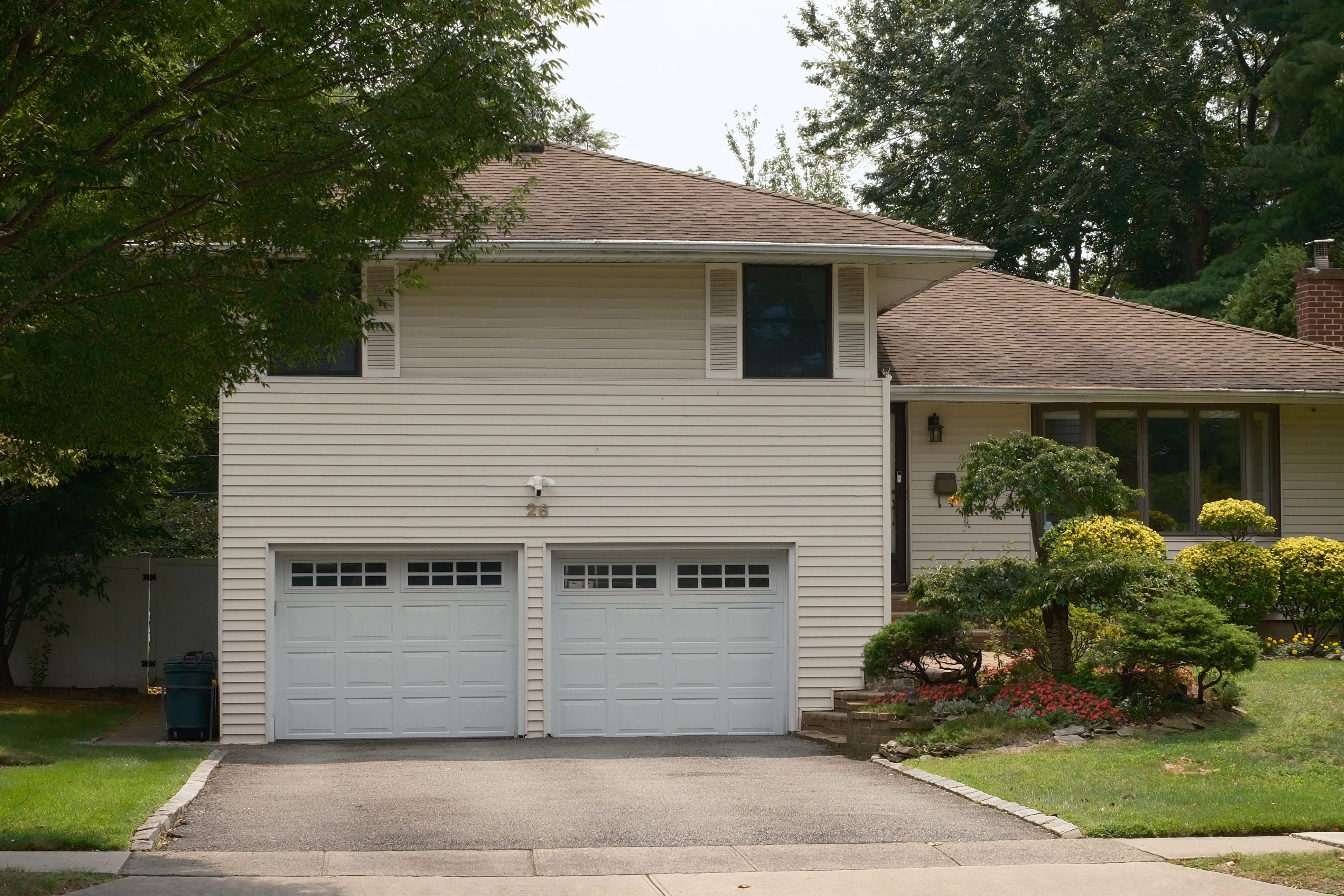
The median house in Cornville was built in 1989, which puts almost everything here inside the same 1985-to-1991 window that defines a lot of this part of the service area. That matters more than people think. Doors and openers from that era were built to a different standard than what's sold now - lighter-gauge steel sections, extension spring setups that were still common before torsion became the default, and chain-drive openers with worn-out logic boards that nobody's making parts for anymore. If your door is original to the house, you're not dealing with a modern failure pattern.
You're dealing with hardware that's outlived its intended service life by a decade or two, and the failure usually isn't cosmetic - it's a spring that finally gives out, or a drive gear that's been slipping for months before it strips outright. Cold-moderate winters in this part of Arizona also mean the metal cools and contracts more than most owners expect, which speeds up fatigue on old springs and worn rollers. None of that is unique to any one street here - it's the whole area, because the whole area went up in the same few years.
What we find
The Houses Here
With roughly 1,457 households in Cornville, this isn't a sprawling suburb - it's a tight cluster of homes built inside a fairly narrow stretch of years, and that shows in the doors we get called out to fix. Across the wider service area, about 7,259 of 8,775 households own the house they live in, and Cornville fits that owner-occupied pattern rather than a rental-heavy one - people here tend to have lived with the same door a long time, which is part of why original 1980s hardware is still so common.
Median household income across the service area runs $70,925, and what we see reflected in that is homeowners who'll fix a door rather than let it sit broken, but who also want the repair to make sense against the cost of full replacement. That's a real conversation we have on a lot of these calls - a 1989 door with a stripped opener gear isn't always worth saving once you add up the parts, and we'll tell you that straight instead of running up a bill on something we wouldn't put in our own garage.
How we work
Older vs Newer Streets
In a lot of towns we cover, you can drive from a street of 1960s ranch houses to a subdivision from last year and the doors tell two completely different stories. Cornville doesn't really give you that contrast. Because most of the area's homes landed in that 1985-1991 stretch - part of the broader pattern across the six named areas we track in this service region - you don't get much of an older-versus-newer split here.
What you get instead is a lot of doors approaching the same age at roughly the same time, which is actually useful for planning: if one neighbor's torsion spring just went, the house two doors down built the same year is probably not far behind. We can't tell you the exact street-by-street layout without guessing, and we won't do that. What we can tell you is that when a Cornville door fails, it's rarely a fluke - it's usually just that particular door's turn.
Service areas
Other areas we cover near Cornville
Questions
Common questions
How far out is Cornville from your shop?
About 10 miles from Sedona. We don't keep a location in Cornville itself - we drive out from Sedona for calls in the area, so factor that into how soon someone can get to you.
Why do so many doors in Cornville fail around the same time?
Most homes here were built between 1985 and 1991, with 1989 as the typical year. That means a lot of original springs, openers, and hardware are all aging out around the same window, so failures tend to cluster by age rather than by random chance.
Is it worth repairing a door this old or should I replace it?
Depends on what's actually broken. A worn spring or roller is usually a straightforward fix. A stripped opener gear on a chain drive from the late 80s, paired with a rusted track, starts tipping toward replacement - we'll walk you through the real cost comparison on site rather than guess over the phone.
Do cold winters here affect garage door springs?
Yes. This area sits in a cold-moderate climate band, and metal contracts more in winter than most owners expect. On springs that are already near the end of their life, that extra stress is often what finally breaks them.
Ready when you are
Need a garage door sorted in Sedona?
Sedona Garage Door Pros repairs and installs garage doors, springs and openers in Sedona, AZ and the surrounding area.