
Guide
Why Sedona's 1980s Housing Stock Breaks Springs the Way It Does
Most Sedona houses in this service area went up between 1985 and 1991. Here's what that build era and cold-moderate winters mean for your spring and opener today.
Local detail
What Local Conditions Do
Most of the houses this company works on across the six named areas of the service territory went up between 1985 and 1991, with the median build year landing at 1987. That matters more than people think. A torsion spring installed when a house was built is rated for a certain number of cycles, and a spring pushing 35+ years old is well past due whether it looks fine or not.
Add a cold-moderate climate band and you get steel that stiffens and loses a little tension every time the temperature drops overnight, then gets asked to lift a door at full weight the next cold morning. That combination - original-era spring plus cold snap - is the single most common reason for a snapped spring call. It's not that Sedona weather is unusually harsh.
It's that a lot of the springs out there are the same age as the house, and the metal doesn't forgive both an old install and a cold start at once. If your house falls in that 1985-1991 window, the spring under your door has likely never been swapped.
The area
Checking It Yourself
You can get a rough read on your spring's age without pulling it apart. Look at the coil for rust bloom, flat spots, or a gap between coils that looks uneven side to side - on a house built in the late 1980s, that wear is expected by now, not a warning sign of bad luck. Lift the door by hand with the opener disconnected: if it feels heavy or drops on its own past halfway, the spring has lost tension.
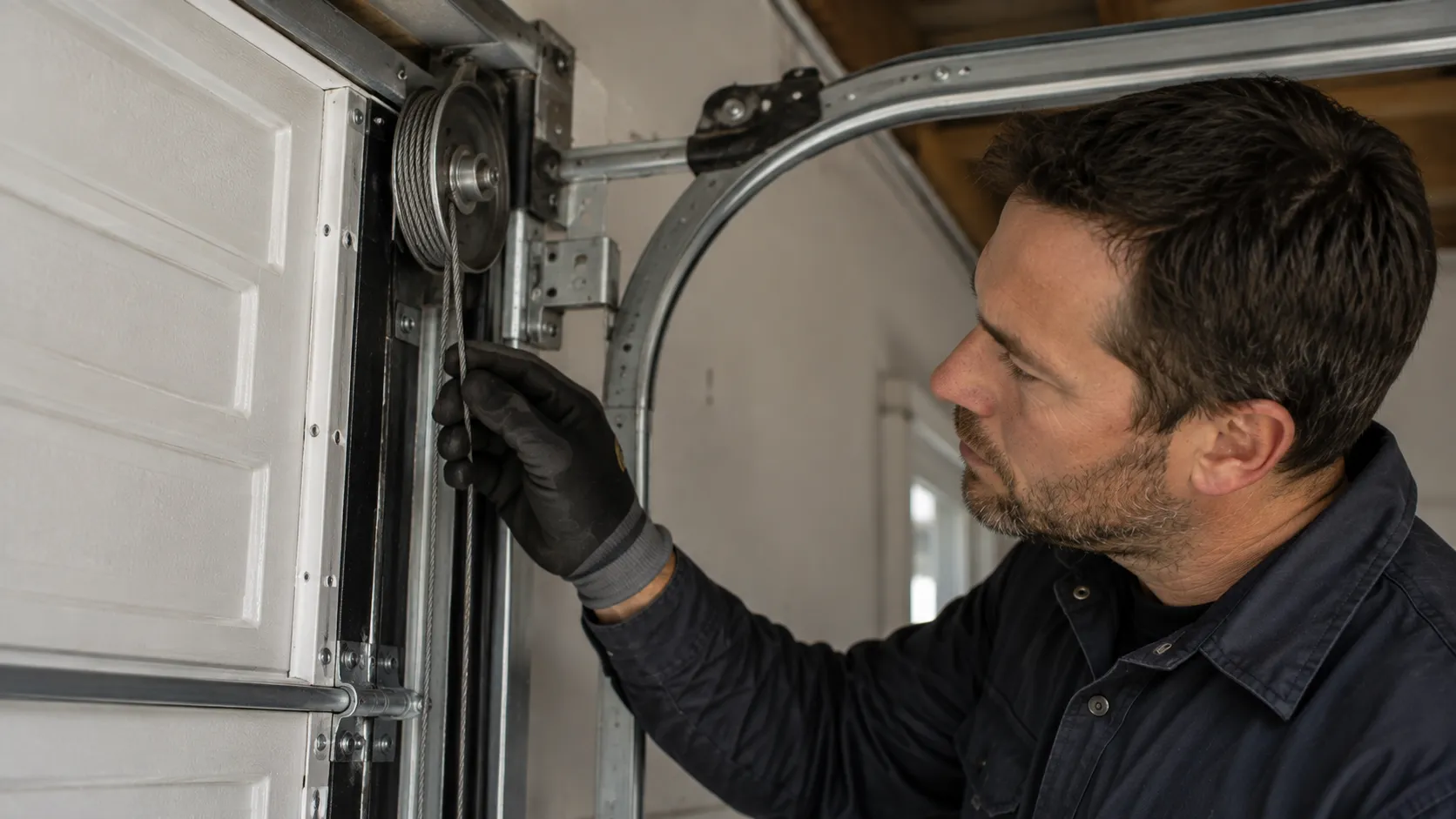
Do this on a cold morning if you can, since that's when a weak spring shows itself fastest. One thing we won't do over the phone is guess at spring size from a description - torsion springs are wound to specific wire gauge and length, and getting it wrong either strains the opener or leaves the door imbalanced. If you're not sure what you're looking at, a photo of the spring and the cable drum tells us more than a description ever will.
What we find
The Situation
Across this service area there are roughly 8,775 households, and 7,259 of those are owner-occupied houses - meaning most of the doors we see belong to people who plan on being there a while, not landlords doing the cheapest fix. With a median household income of $70,925, replacement is usually a reasonable option when a spring failure exposes bigger problems, like a track that's been fighting a misaligned door for years or an opener straining against a spring that should've been swapped a decade ago.
We're two miles southeast of Chapel, and the same 1980s-era stock shows up whether we're checking a door in that immediate area or out toward Cornville, ten miles off. The honest limitation here: if your door is original hardware from the 1987 median build year, we're not going to patch a spring and call it done - matching a new spring to a 35-year-old drum and cable setup usually costs you more in a second call than doing both at once.
How we work
What Changes With the Season
In a cold-moderate climate, the failure pattern shifts with the calendar more than people expect. Cold mornings are when a marginal spring finally lets go, because contracted steel has less give right when the door demands full lift. That's the season to listen for a door that groans or hesitates on the way up rather than waiting for a full snap.
On the flip side, an opener that's been quietly compensating for a weak spring all year tends to burn out its drive gear faster once it's fighting cold-stiffened steel every morning. If you've noticed your opener working harder from one season to the next, that's usually the spring talking before it fails outright, not the opener itself going bad.
Questions
Common questions
How do I know if my spring is original to the house?
If your home was built in the 1985-1991 window that covers most of this area, and nobody's mentioned a spring replacement to you, assume it's original. Springs don't usually last that long under regular use, so a spring that old is a matter of when, not if.
Why does my door seem worse in winter?
Cold steel loses tension, and a spring that's marginal in warm weather often fails outright on a cold morning. It's the combination of age and temperature drop, not the cold alone, that causes most winter spring failures here.
Can you just replace one spring and leave the other?
On a two-spring door, we generally recommend replacing both at the same time, since they're usually the same age and wear at a similar rate. Replacing only the broken one often means a second failure and a second call within a year or two.
Is repair or replacement the better call for an older door?
If the spring, drum, and cables all date to the original 1980s install, patching just the spring can leave you with mismatched hardware. We'll look at the whole assembly before recommending, but for original-era doors, full replacement is often the more honest answer.
Ready when you are
Need a garage door sorted in Sedona?
Sedona Garage Door Pros repairs and installs garage doors, springs and openers in Sedona, AZ and the surrounding area.