
Guide
Is Your Sedona Garage Door Worth Fixing, or Is It Time
Most Sedona homes date to 1985-1991, so doors and openers are now pushing 35+ years old. Here's how to tell repair from replace on this housing stock.
Local detail
What Local Conditions Do
Sedona sits in a cold-moderate climate band, which means the garage door on your house sees real temperature swings between winter nights and summer afternoons, not the flat mild weather some parts of the country get. That swing works metal fatigue into springs and hardware faster than a steady climate does. Combine that with the fact that most houses across the six named areas of this service area went up between 1985 and 1991 - median year 1987 - and you get a specific problem: doors and openers original to the house are now pushing 34 to 39 years old.
That's well past the working life of most torsion springs and well into the range where the original opener's gears, capacitor, and safety sensors are due for failure, if they haven't already failed once. A door that age isn't broken because you did something wrong. It's broken because it's old, and the parts wear out on a schedule regardless of how well you've treated the door.
The area
Checking It Yourself
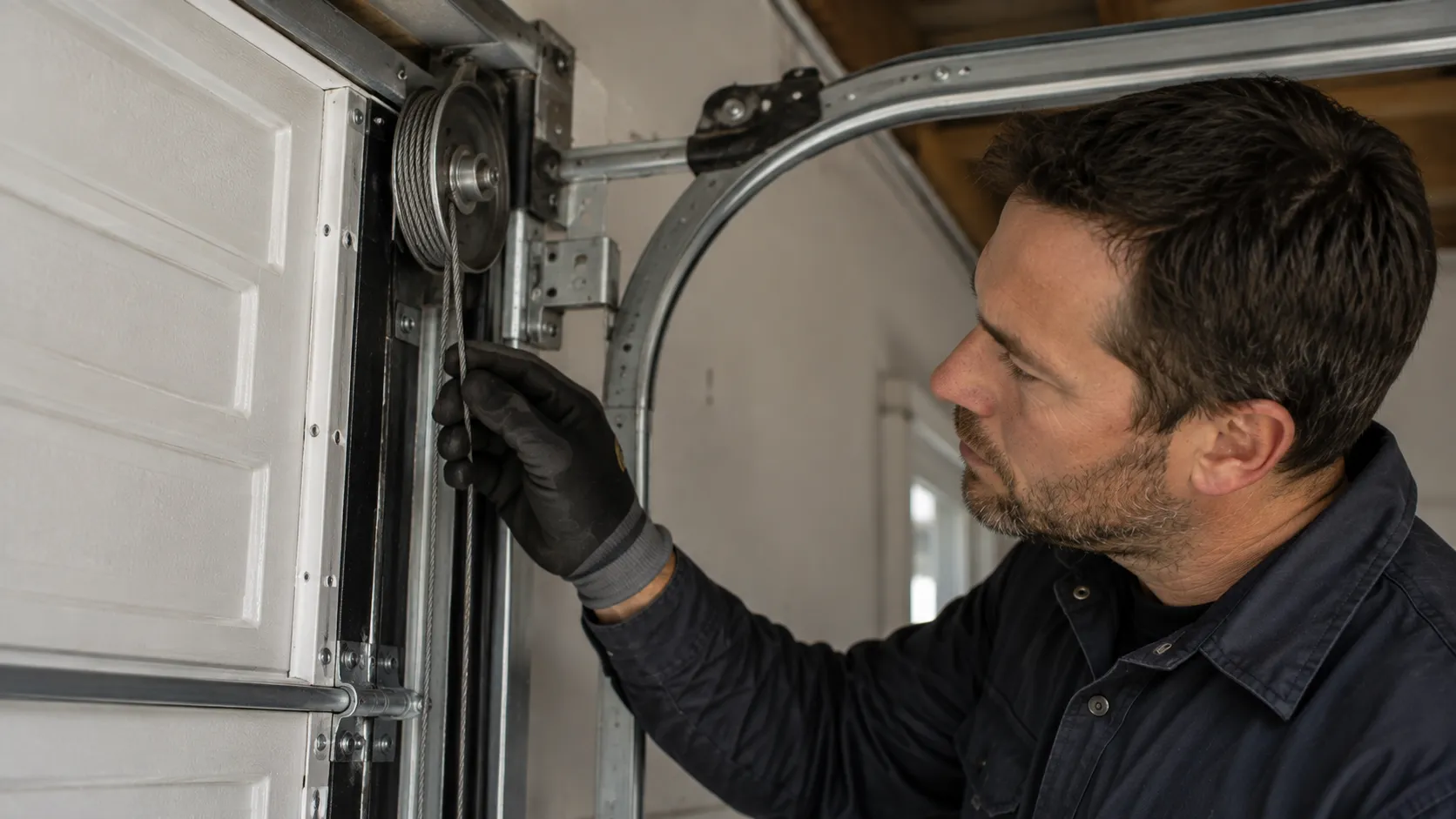
Before you call anyone, look at three things. First, the spring - if it's a single torsion spring above the door and there's a visible gap where it's separated, that's a broken spring, and on a door this age it's often the original spring never having been replaced. Second, the opener - if it's the same unit that came with an 1987-era house, check for a chain drive with visible slack, sagging, or grinding, since that's typical of openers this old. Third, the track - press on it gently at the seams; on houses of this vintage, track brackets loosen from decades of the door's own weight cycling through it.
None of this requires taking anything apart. If the spring is intact and the door still won't move, or moves partway and stops, that's more likely the opener's logic board or a worn drive gear than anything you can diagnose by eye. That's the point where guessing costs you more than a call.
What we find
The Situation
Across this area's roughly 8,775 households, with about 7,259 of those in owner-occupied houses, the housing stock is heavily 1980s and 90s construction. That means a lot of doors and openers out there share the same age and the same failure points at roughly the same time - it isn't one unlucky house, it's a wave. At a median household income of $70,925, replacing a door and opener outright is a real cost most owners weigh carefully against a repair.
Here's the honest limitation: if the door panels themselves are original steel from 1987 and dented or rusted through, no spring or opener repair fixes that, and we'll tell you so rather than patch around it. But if the panels are sound and it's the spring, cables, rollers, or opener that failed, repair on a door this age is usually the right call - the frame and track hardware from that era were built heavier than a lot of what goes into new construction now.
How we work
What Changes With the Season
In a cold-moderate climate, the load on a garage door spring isn't constant through the year. Cold snaps stiffen the lubricant in rollers and hinges and make steel more brittle right at the moment torque on the spring is highest - that's why a lot of spring failures on doors from the Cornville, Munds Park, Lake Montezuma, Clarkdale, Kachina Village, and Mountainaire areas cluster in the colder months rather than spreading evenly across the year.
If your door is groaning or moving slower than usual as temperatures drop, that's the spring telling you it's near the end, not the cold making a healthy door act up. Worth checking before the coldest stretch hits rather than after the spring lets go and the door won't open at all.
Questions
Common questions
My house was built in the late 1980s. Is the original garage door opener still safe to use?
An opener that old has likely outlived its safety sensor components and drive gears, even if it still runs. On houses from the 1985-1991 wave common across this area, we usually find the auto-reverse safety feature no longer works correctly, which is a real hazard, not just an inconvenience.
How do I know if it's the spring or the opener that failed?
Pull the manual release cord and try lifting the door by hand. If it's very heavy or won't stay up on its own, the spring is broken or badly weakened. If it lifts easily by hand but the opener still won't move it, the problem is in the opener, not the spring.
Is it worth replacing an old door instead of repairing it?
Depends on the panels. If the steel is dented, rusted through, or warped, no repair to the spring or opener fixes that, and replacement makes more sense. If the panels are sound and it's hardware failure, repair is usually the better value on a door built this solidly.
Ready when you are
Need a garage door sorted in Sedona?
Sedona Garage Door Pros repairs and installs garage doors, springs and openers in Sedona, AZ and the surrounding area.